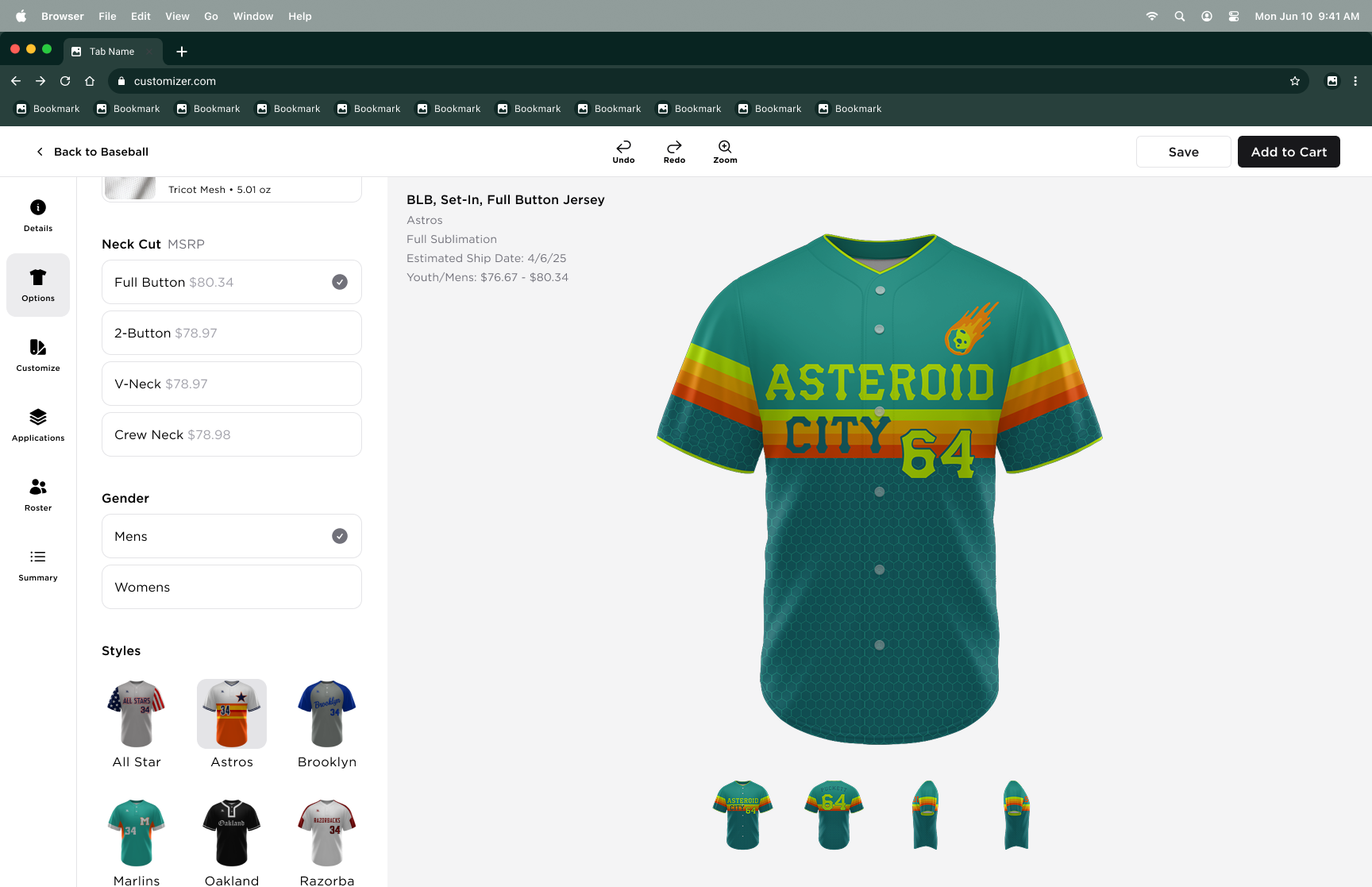
Reducing Time to Design
Redesigning a uniform designer around how sales reps actually work.
ROLE
Lead Designer and Product Manager
COMPANY
PROLOOK
TOOLS
Figma
USERS
Account reps, Sales team, customers
10 min → 1 min
Time to design a reversible
Measured in staging
10-50 → 5 or fewer
Color changes to recolor a design
Measured in staging
2 tabs cut
Patterns, piping, and colors now share one tab
Reducing complexity
The Problem
The uniform designer was part of a full refresh of the site's look, and it also needed to work better. Sales and account reps told me it was confusing and complex to use. So I sat with them and watched how they used it, to see where they got stuck.
I was the lead designer and also the product and project manager. It was just me, with input from developers on how things could work.
Change 1
One Tab for Everything
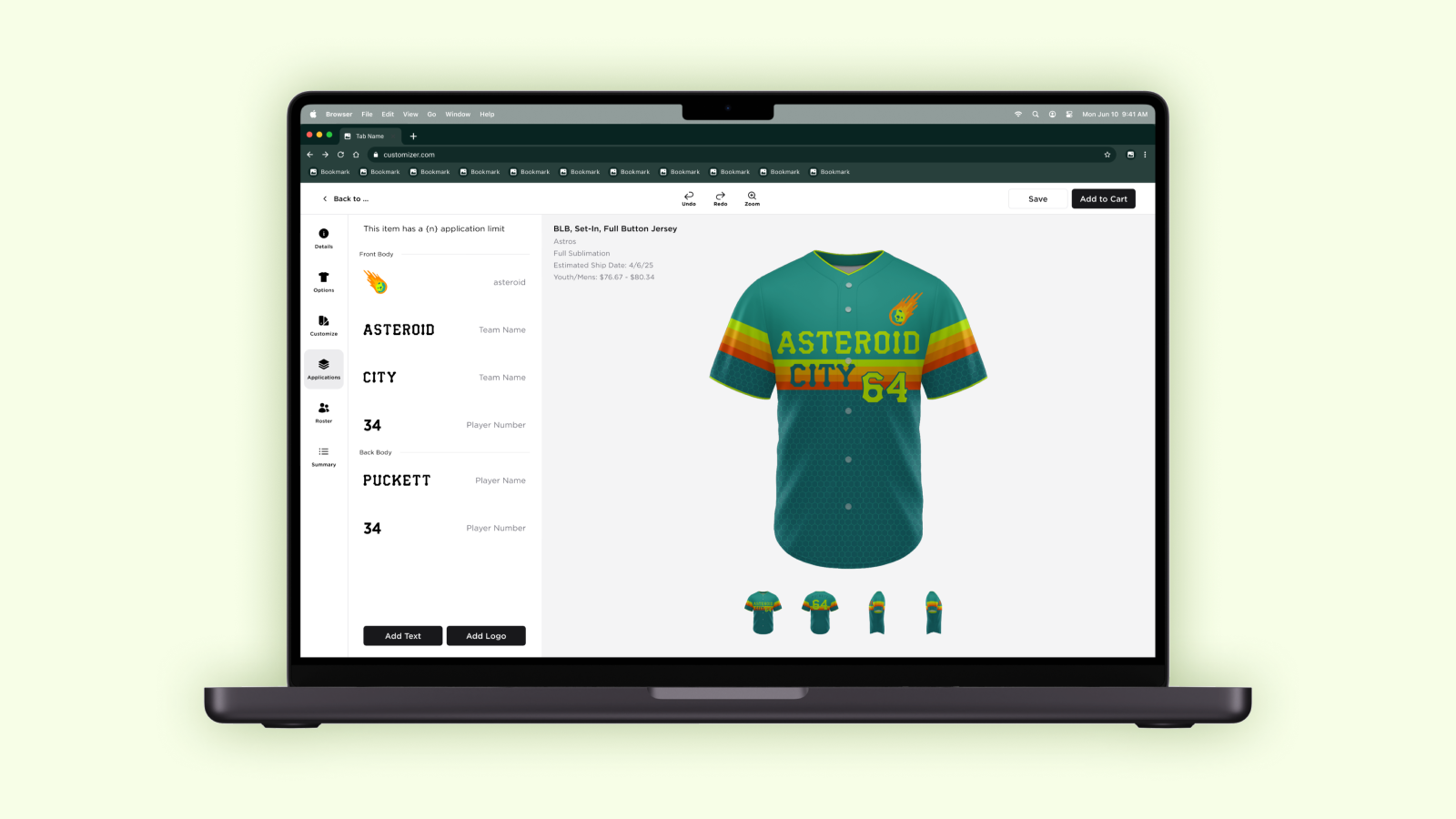
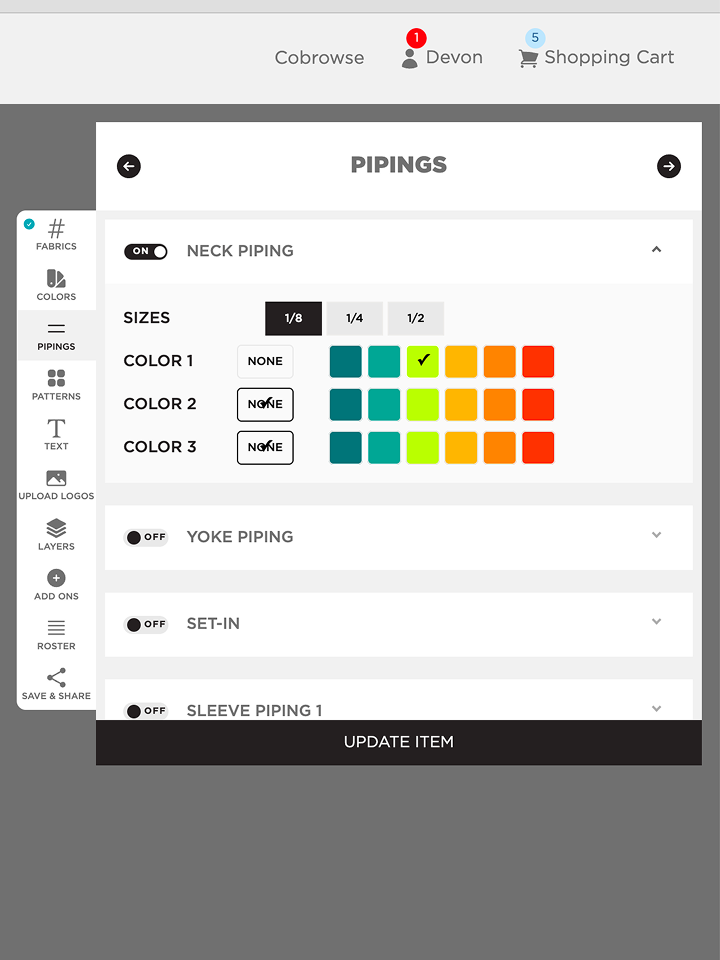
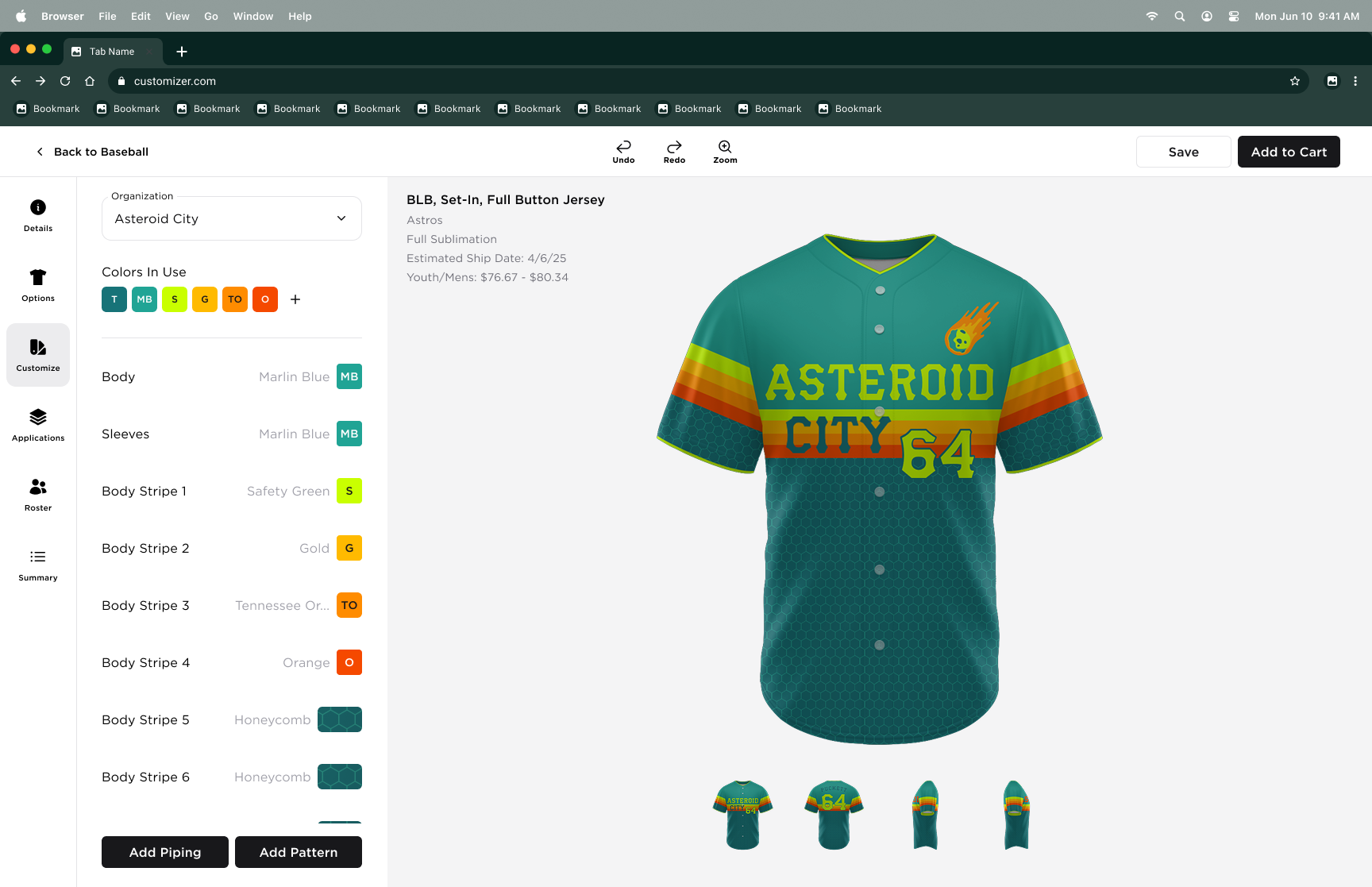
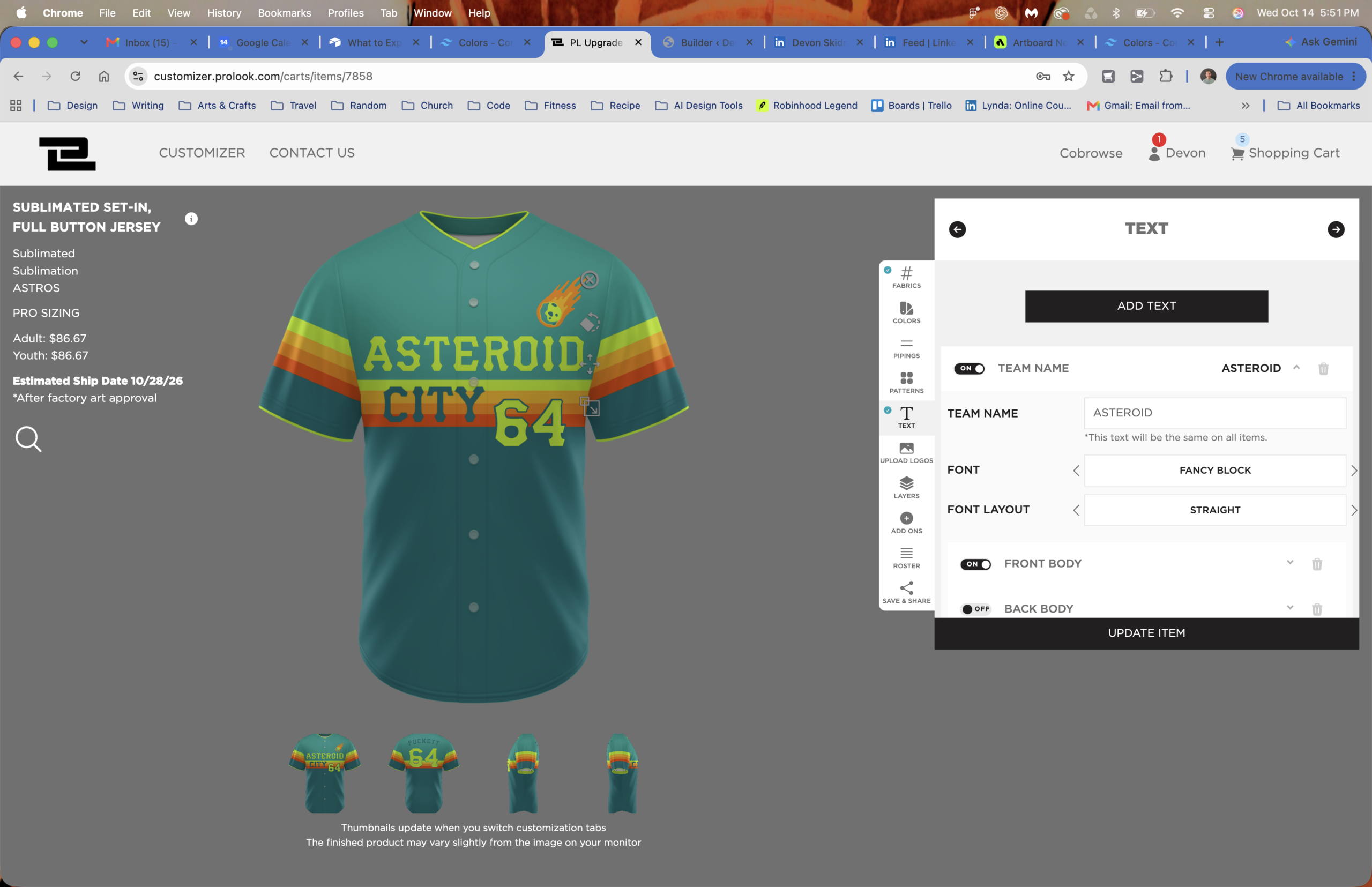
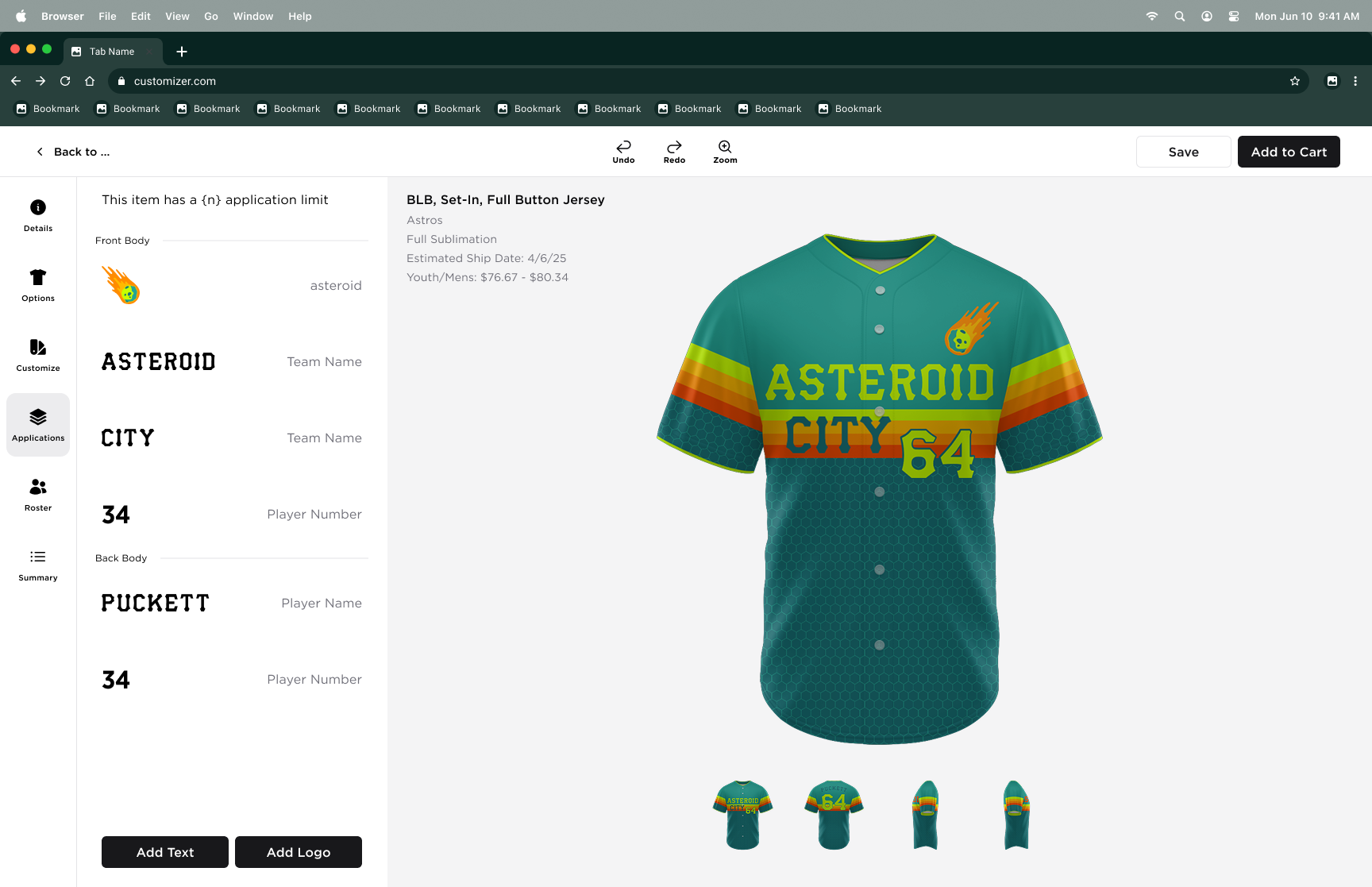
Patterns, piping and colors used to live on separate tabs, so reps jumped back and forth to finish one design. Text and logos had their own complex steps too. I merged these into one tab, which cut two tabs, and I made adding text and logos simpler. Now everything a rep needs is in one spot.
Before • Three tabs
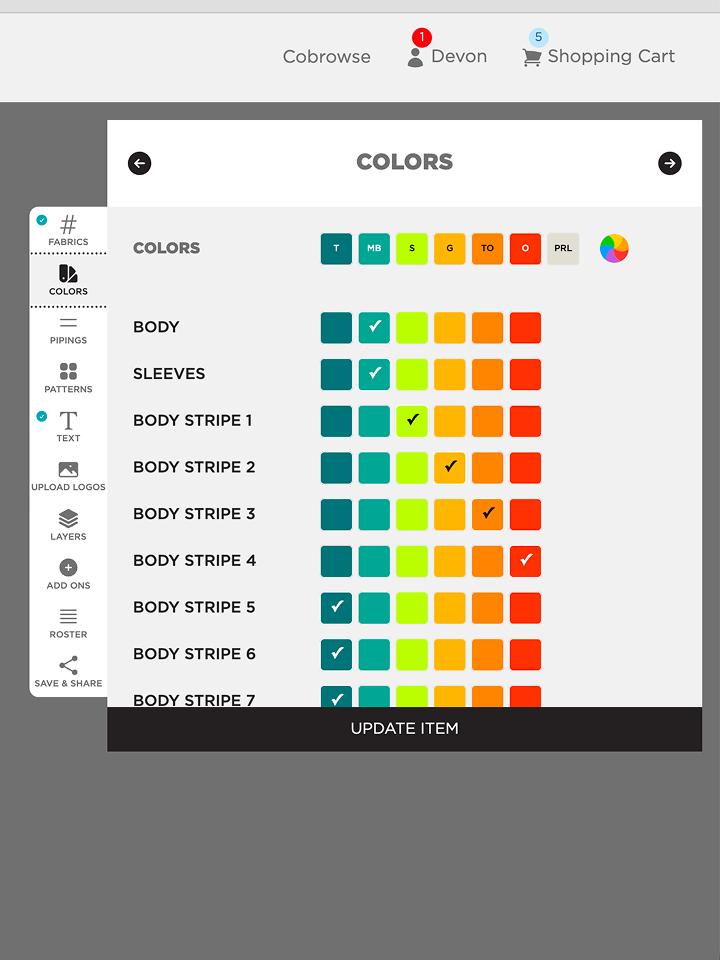
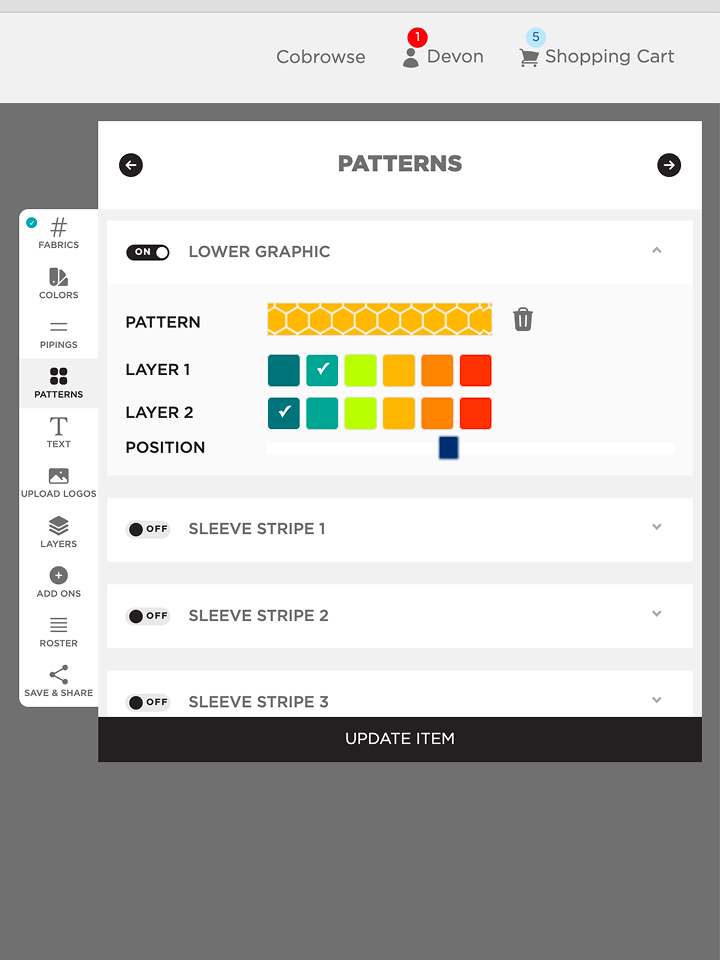
After • One tab for colors, patterns, and piping
Applications were controlled in three places
Now everything is done in one spot.
Change 2
Simplifying Reversibles
A reversible uniform has two sides. Reps used to build the second side by hand, making and placing every part again. That could take upwards of 10 minutes. I turned it into a few clicks that carry the design over to the other side.
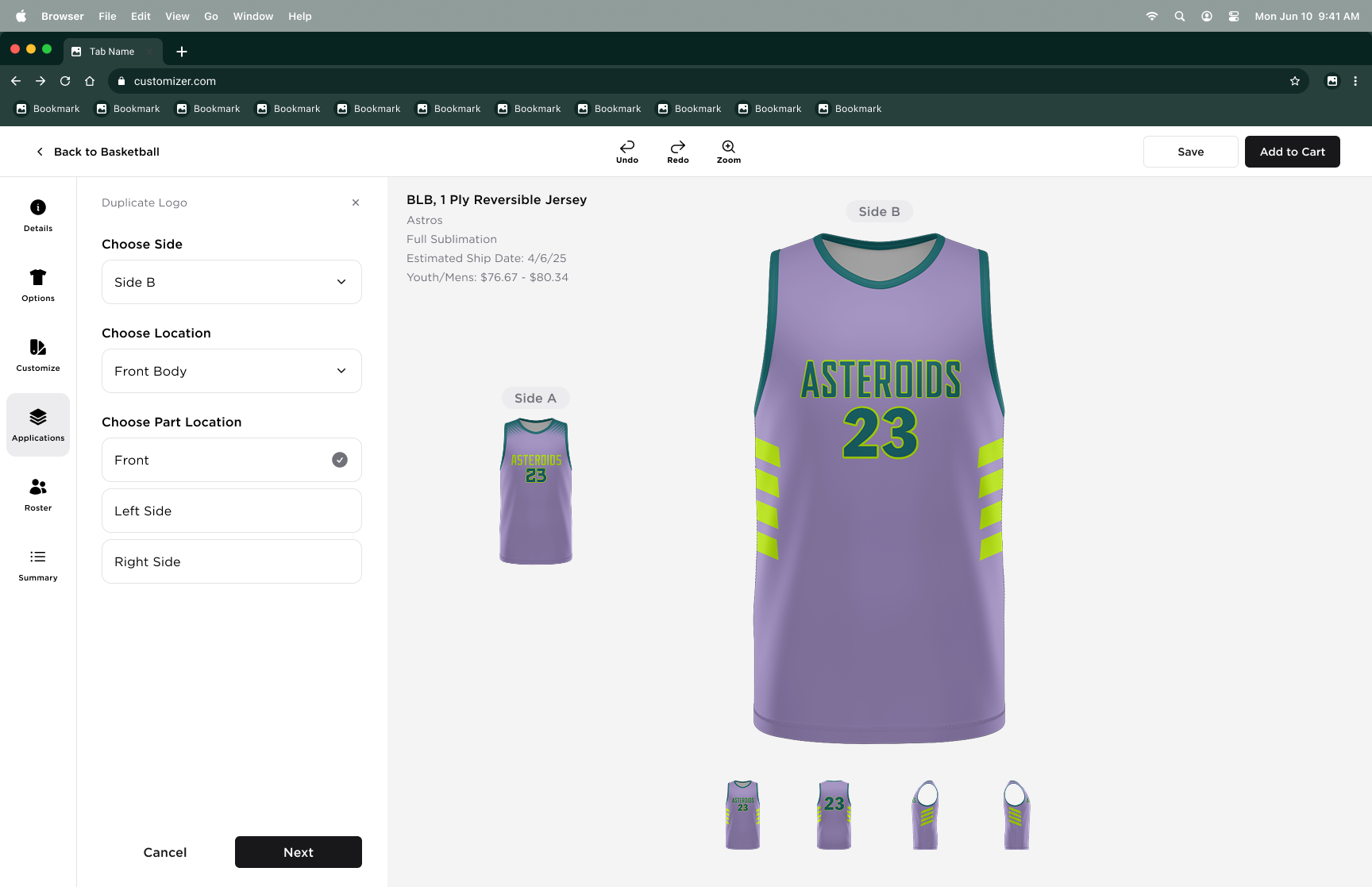
Duplicating applications from one side to the other went from 10 minutes to 1 minute
Change 3
Master Colors
Many reps reuse a design for a new team and only change the colors. Before, that meant changing each color by hand, which could take 10 to 50 changes for a single item. I added master colors. When you change one, it updates everywhere that color is used.
Where It Led
The redesign was finished and in staging when I left. I also designed two features for later. One let reps design several products at once. The other let them switch between similar products and keep their design. Both were held back because they were complex to build on the back end.